
Accentuated bioavailability of bioactive compounds in foods by nanotechnology-based delivery approaches
Main Article Content
Keywords
Bioavailability; encapsulation; food nanobiotechnology; nutrients; vitamins; SDGs
Abstract
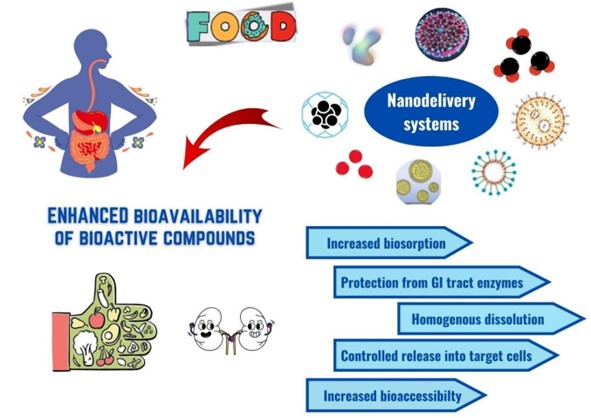
One of the perennial problems faced by the food industry is the poor bioavailability of nutrients, arising generally due to lowered solubility or inadequate absorption by the gastrointestinal tract. Nanotechnology-based encapsulation tech-niques have shown to significantly enhance the bioavailability of various food bioactive compounds. Targeted delivery of specific nutrients to specific organs, low toxicity, maximization of nutrient uptake, extended release of nutrients, and enhanced texture and flavor are the major advantages of such systems, a few of which are discussed in this review. In keeping with these pertinent paradigms, the current review also highlights how food nanotechnology-based delivery sys-tems ensure efficient bioaccessibility of dietary compounds that otherwise cannot be maximally achieved under in vivo conditions or by using biopolymer-based encapsulation. However, as with any technology, this also comes with its own set of drawbacks and lacunae, which are also presented in the current review. With the surge in global population, emphasis should be placed on optimizing bioavailability of vital food nutrients, catering to Sustainable Development Goals (SDGs) 2 and 3. In a global landscape, a collaborative effort from regulatory bodies, consumers, and manufacturers will enable sat-isfactory, efficient, and safe commercialization of nanotechnological delivery systems for functional foods and bioactives.
References
Abu Safe, F.A., Badr, A.N., Shehata, M.G. and El-Sayyad, G.S., 2023. Antimicrobial and anti-aflatoxigenic activities of nanoemulsions based on Achillea millefolium and Crocus sativus flower extracts as green promising agents for food preservatives. BMC Microbiology 23(1): 289. https://doi.org/10.1186/s12866-023-03033-2
Ahmad, M.H., Safdar, S., Kousar, S., Nadeem, M. and Asghar, Z., 2021. Functional foods and human health: An overview. Functional Foods: Phytochemicals and Health Promoting Potential 3.
Al Mahmud, M.Z., Mobarak, M.H. and Hossain, N., 2024. Emerging trends in biomaterials for sustainable food packaging: A comprehensive review. Heliyon 10(1): e21422. https://doi.org/10.1016/j.heliyon.2024.e24122
Alongi, M. and Anese, M., 2021. Re-thinking functional food development through a holistic approach. Journal of Functional Foods 81: 104466. https://doi.org/10.1016/j.jff.2021.104466
Amjadi, S., Almasi, H., Ghorbani, M. and Ramazani, S., 2020. Preparation and characterization of TiO2NPs and betanin loaded zein/sodium alginate nanofibers. Food Packaging and Shelf Life 24: 100504
Arshad, R., Gulshad, L., Haq, I.U., Farooq, M.A., Al‐Farga, A., Siddique, R., et al. 2021. Nanotechnology: A novel tool to enhance the bioavailability of micronutrients. Food Science & Nutrition 9(6): 3354–3361. https://doi.org/10.1002/fsn3.2311
Bahadar, H., Maqbool, F., Niaz, K. and Abdollahi, M., 2016. Toxicity of nanoparticles and an overview of current experimental models. Iranian Biomedical Journal 20(1): 1. https://doi.org/10.7508/ibj.2016.01.001
Bai, L., Huan, S., Rojas, O.J. and McClements, D.J., 2021. Recent innovations in emulsion science and technology for food applications. Journal of Agricultural and Food Chemistry 69(32): 8944–8963. https://doi.org/10.1021/acs.jafc.1c01877
Banwo, K., Olojede, A.O., Adesulu-Dahunsi, A.T., Verma, D.K., Thakur, M., Tripathy, S., et al. 2021. Functional importance of bioactive compounds of foods with potential health benefits: A review on recent trends. Food Bioscience 43: 101320. https://doi.org/10.1016/j.fbio.2021.101320
Bao, C., Jiang, P., Chai, J., Jiang, Y., Li, D., Bao, W., et al. 2019. The delivery of sensitive food bioactive ingredients: Absorption mechanisms, influencing factors, encapsulation techniques and evaluation models. Food Research International 120: 130–140. https://doi.org/10.1016/j.foodres.2019.02.024
Baysal, G. and Doğan, F., 2020. Investigation and preparation of biodegradable starch-based nanofilms for potential use of curcumin and garlic in food packaging applications. Journal of Biomaterials Science Polymer Edition 31(9): 1127–1143. https://doi.org/10.1080/09205063.2020.1743947
Bi, F., Zhang, X., Liu, J., Yong, H., Gao, L. and Liu, J., 2020. Development of antioxidant and antimicrobial packaging films based on chitosan, D-α-tocopheryl polyethylene glycol 1000 succinate and silicon dioxide nanoparticles. Food Packaging and Shelf Life 24: 100503
Bratovcic, A., 2020. Nanomaterials in food processing and packaging, its toxicity and food labeling. Acta Scientific Nutritional Health 4(9): 07–13.
Cefali, L.C., Ataide, J.A., Eberlin, S., da Silva Goncalves, F.C., Fernandes, A.R., Marto, J., et al. 2019. In vitro SPF and photostability assays of emulsion containing nanoparticles with vegetable extracts rich in flavonoids. AAPS PharmSciTech 20: 1–10. https://doi.org/10.1208/s12249-018-1217-7
Charoo, N.A., Rahman, Z. and Khan, M.A., 2019. Nanoparticles for improvement in oral bioavailability. In Grumezescu, A.M., editor. Nanoarchitectonics in biomedicine. Amsterdam, Netherlands: William Andrew Publishing. pp. 371–410.
Chatterjee, N.S., Dara, P.K., Raman, S.P., Vijayan, D.K., Sadasivam, J., Mathew, S., et al. 2021. Nanoencapsulation in low‐molecular‐weight chitosan improves in vivo antioxidant potential of black carrot anthocyanin. Journal of the Science of Food and Agriculture. 101(12): 5264–5271. https://doi.org/10.1002/jsfa.11175
Chedea, V.S., Tomoiagǎ, L.L., Macovei, Ş.O., Mǎgureanu, D.C., Iliescu, M.L., Bocsan, I.C., et al. 2021. Antioxidant/pro-oxidant actions of polyphenols from grapevine and wine by-products-base for complementary therapy in ischemic heart diseases. Frontiers in Cardiovascular Medicine 8: 750508. https://doi.org/10.3389/fcvm.2021.750508
Chen, J. and Hu, L., 2020. Nanoscale delivery system for nutraceuticals: Preparation, application, characterization, safety, and future trends. Food Engineering Reviews 12(1): 14–31. https://doi.org/10.1007/s12393-019-09208-w
Chen, L., Cao, H., Huang, Q., Xiao, J. and Teng, H., 2021. Absorption, metabolism and bioavailability of flavonoids: A review. Critical Reviews in Food Science and Nutrition 62(28): 7730–7742. https://doi.org/10.1080/10408398.2021.1917508
Chen, Y., Ge, H., Zheng, Y., Zhang, H., Li, Y., Su, X., et al. 2020. Phospholipid–protein structured membrane for microencapsulation of DHA oil and evaluation of its in vitro digestibility: Inspired by milk fat globule membrane. Journal of Agricultural and Food Chemistry 68(22): 6190–6201. https://doi.org/10.1021/acs.jafc.0c01250
Cheng, C., Peng, S., Li, Z., Zou, L., Liu, W. and Liu, C., 2017. Improved bioavailability of curcumin in liposomes prepared using a pH-driven, organic solvent-free, easily scalable process. RSC Advances 7(42): 25978–25986. https://doi.org/10.1039/c7ra02861j
Cui, G., Su, W. and Tan, M., 2022. Formation and biological effects of protein corona for food‐related nanoparticles. Comprehensive Reviews in Food Science and Food Safety 21(2): 2002–2031. https://doi.org/10.1111/1541-4337.12838
D’Archivio, M., Filesi, C., Varì, R., Scazzocchio, B. and Masella, R., 2010. Bioavailability of polyphenols: Status and controversies. International Journal of Molecular Sciences 11(4): 1321–1342. https://doi.org/10.3390/ijms11041321
Das, A.B., Goud, V. and Das, C., 2018. Microencapsulation of anthocyanin extract from purple rice bran using modified rice starch and its effect on rice dough rheology. International Journal of Biological Macromolecules 124: 573–581. https://doi.org/10.1016/j.ijbiomac.2018.11.247
Dey, T.K., Koley, H., Ghosh, M., Dey, S. and Dhar, P., 2018. Effects of nano-sizing on lipid bioaccessibility and ex vivo bioavailability from EPA-DHA rich oil in water nanoemulsion. Food Chemistry 275: 135–142. https://doi.org/10.1016/j.foodchem.2018.09.084
Dima, C., Assadpour, E., Dima, S. and Jafari, S.M., 2020. Bioavailability of nutraceuticals: Role of the food matrix, processing conditions, the gastrointestinal tract, and nanodelivery systems. Comprehensive Reviews in Food Science and Food Safety 19(3): 954–994. https://doi.org/10.1111/1541-4337.12547
Dima, C., Assadpour, E., Dima, S. and Jafari, S.M., 2021. Nutraceutical nanodelivery; an insight into the bioaccessibility/bioavailability of different bioactive compounds loaded within nanocarriers. Critical Reviews in Food Science and Nutrition 61(18): 3031–3065. https://doi.org/10.1080/10408398.2020.1792409
Ding, L., Luo, X., Xian, Q., Zhu, S. and Wen, W., 2024. Innovative approaches to fucoxanthin delivery: Characterization and bioavailability of solid lipid nanoparticles with eco-friendly ingredients and enteric coating. International Journal of Molecular Sciences 25(23): 12825. https://doi.org/10.3390/ijms252312825
Docter, D., Westmeier, D., Markiewicz, M., Stolte, S., Knauer, S.K. and Stauber, R.H., 2015. The nanoparticle biomolecule corona: Lessons learned–challenge accepted? Chemical Society Reviews 44(17): 6094–6121. https://doi.rg/10.1039/C5CS00217F
Donkor, F., Okafor, M.N. and Enyejo, J.O., 2025. Investigating nanotechnology-based smart packaging for extending dairy product shelf life and improving food quality assurance. https://doi.org/10.5281/zenodo.17381311
Dordevic, S., Dordevic, D., Tesikova, K., Sedlacek, P., Kalina, M., Vapenka, L., et al. 2024. Nanometals incorporation into active and biodegradable chitosan films. Heliyon 10(7): e28430. https://doi.org/10.1016/j.heliyon.2024.e28430
Drozdzik, M., Czekawy, I., Oswald, S. and Drozdzik, A., 2020. Intestinal drug transporters in pathological states: An overview. Pharmacological Reports 72(5) : 1173–1194. https://doi.org/10.1007/s43440-020-00139-6
Du, Q., Zhou, L., Li, M., Lyu, F., Liu, J. and Ding, Y. (2022). Omega‐3 polyunsaturated fatty acid encapsulation system: Physical and oxidative stability, and medical applications. Food Frontiers 3(2): 239–255. https://doi.org/10.1002/fft2.134
Duda-Chodak, A., Tarko, T. and Petka-Poniatowska, K., 2023. Antimicrobial compounds in food packaging. International Journal of Molecular Sciences 24(3): 2457.
EFSA (European Food Safety Authority), 2008. Authors Scientific Opinion of the Panel on Dietetic Products, Nutrition and Allergies on a Request from the EC on Food-Based Dietary Guidelines. EFSA Journal 8: 1460.
EFSA Scientific Committee, More, S., Bampidis, V., Benford, D., Bragard, C., Halldorsson, T., et al. 2021. Guidance on technical requirements for regulated food and feed product applications to establish the presence of small particles including nanoparticles. EFSA Journal 19(8): e06769. https://doi.org/10.2903/j.efsa.2021.6769
El-Sabrout, K., Aggag, S. and Mishra, B., 2022. Advanced practical strategies to enhance table egg production. Scientifica 2022(1) : 1393392. https://doi.org/10.1155/2022/1393392.
Esfanjani, A.F., Assadpour, E. and Jafari, S.M., 2018. Improving the bioavailability of phenolic compounds by loading them within lipid-based nanocarriers. Trends in Food Science & Technology 76: 56–66. https://doi.org/10.1016/j.tifs.2018.04.002
García-Álvarez, R. and Vallet-Regí, M., 2021. Hard and soft protein corona of nanomaterials: Analysis and relevance. Nanomaterials 11(4): 888. https://doi.org/10.3390/nano11040888
Geiser, M., Rothen-Rutishauser, B., Kapp, N., Schürch, S., Kreyling, W., Schulz, H., et al. 2005. Ultrafine particles cross cellular membranes by nonphagocytic mechanisms in lungs and in cultured cells. Environmental Health Perspectives 113(11): 1555–1560. https://doi.org/10.1289/ehp.800.
Griffin, S., Masood, M.I., Nasim, M.J., Sarfraz, M., Ebokaiwe, A.P., Schäfer, K.H., et al. 2017. Natural nanoparticles: A particular matter inspired by nature. Antioxidants 7(1): 3. https://doi.org/10.3390/antiox7010003
Honda, M., Takasu, S., Nakagawa, K. and Tsuda, T., 2021. Differences in bioavailability and tissue accumulation efficiency of (all-E)- and (Z)-carotenoids: A comparative study. Food Chemistry 361: 130119. https://doi.org/10.1016/j.foodchem.2021.130119
Han, Y., Fu, S., Yang, X., Yang, X.-n., Wang, X., Zhao, H., et al. 2024. Recent nanotechnology improvements in curcumin bioavailability and related applications. Food Bioscience 61: 104660. https://doi.org/10.1016/j.fbio.2024.104660
Hu, G., Batool, Z., Cai, Z., Liu, Y., Ma, M., Sheng, L., et al. 2021. Production of self-assembling acylated ovalbumin nanogels as stable delivery vehicles for curcumin. Food Chemistry 355: 129635. https://doi.org/10.1016/j.foodchem.2021.129635
Huang, Q., Yu, H. and Ru, Q., 2010. Bioavailability and delivery of nutraceuticals using nanotechnology. Journal of Food Science 75(1): R50–R57. https://doi.org/10.1111/j.1750-3841.2009.01457
Ijabadeniyi, O.A., 2021. 11 Nanofood and ethical issues. Handbook of Nanoethics 191. https://doi.org/10.1515/9783110669282-206
Inventory of nanotechnology applications in the agricultural, feed and food sector, 2020. European Food Safety Authority. https://www.efsa.europa.eu/en/supporting/pub/en-621
Jain, A., Sharma, G., Ghoshal, G., Kesharwani, P., Singh, B., Shivhare, U.S., et al. 2018. Lycopene loaded whey protein isolate nanoparticles: An innovative endeavor for enhanced bioavailability of lycopene and anti-cancer activity. International Journal of Pharmaceutics 546(1–2): 97–105. https://doi.org/10.1016/j.ijpharm.2018.04.061
Jain, K.K., 2020. Role of nanobiotechnology in drug delivery. Methods in Molecular Biology 20159: 55–73. https://doi.org/10.1007/978-1-4939-9798-5-2
Jain, K., Kumar Mehra, N. and K Jain, N., 2015. Nanotechnology in drug delivery: Safety and toxicity issues. Current Pharmaceutical Design 21(29): 4252–4261.
Jampilek, J. and Kralova, K., 2020. Potential of nanonutraceuticals in increasing immunity. Nanomaterials 10(11): 2224. https://doi.org/10.3390/nano10112224
Janiszewska-Turak, E., 2017. Carotenoids microencapsulation by spray drying method and supercritical micronization. Food Research International 99: 891–901. https://doi.org/10.1016/j.foodres.2017.02.001
Jeon, Y.O., Lee, J.S. and Lee, H.G., 2016. Improving solubility, stability, and cellular uptake of resveratrol by nanoencapsulation with chitosan and γ-poly (glutamic acid). Colloids and Surfaces B: Biointerfaces 147: 224–233. https://doi.org/10.1016/j.colsurfb.2016.07.062
Katuwavila, N.P., Perera, A.D.L.C., Dahanayake, D., Karunaratne, V., Amaratunga, G.A. and Karunaratne, D.N., 2016. Alginate nanoparticles protect ferrous from oxidation: Potential iron delivery system. International Journal of Pharmaceutics 513(1–2): 404–409. https://doi.org/10.1016/j.ijpharm.2016.09.053
Kewuyemi, Y.O., Kesa, H. and Adebo, O.A., 2022. Trends in functional food development with three-dimensional (3D) food printing technology: Prospects for value-added traditionally processed food products. Critical Reviews in Food Science and Nutrition 62(28): 7866–7904. https://doi.org/10.1080/10408398.2021.1920569
Knijnenburg, J.T., Posavec, L. and Teleki, A., 2019. Nanostructured minerals and vitamins for food fortification and food supplementation. In Rubio, A.L., Sanz, M.M., Rovira, M.J.F. and GómezMascaraque, L.G., editors. Nanomaterials for food applications. Amsterdam, Netherlands: Elsevier. pp. 63–98.
Kousheh, S.A., Moradi, M., Tajik, H. and Molaei, R., 2020. Preparation of antimicrobial/ultraviolet protective bacterial nanocellulose film with carbon dots synthesized from lactic acid bacteria. International Journal of Biological Macromolecules. 155: 216–255. https://doi.org/10.1016/j.ijbiomac.2020.03.230
Kulinowski, K. and Lippy, B., 2011. Training Workers on Risks of Nanotechnology. Washington, D.C., U.S. Department of Health and Human Services/ National Institutes of Health, National Institute of Environmental Health Sciences.
Kumkum, R., Aston-Mourney, K., McNeill, B.A., Hernández, D. and Rivera, L.R., 2024. Bioavailability of anthocyanins: Whole foods versus extracts. Nutrients 16(10): 1403. https://doi.org/10.3390/nu16101403
Kussmann, M., Cunha, D.H.A. and Berciano, S., 2023. Bioactive compounds for human and planetary health. Frontiers in Nutrition 10: 1193848. https://doi.org/10.3389/fnut.2023.1193848
Lee, S.H., Bajracharya, R., Min, J.Y., Han, J.W., Park, B.J. and Han, H.K., 2020. Strategic approaches for colon targeted drug delivery: An overview of recent advancements. Pharmaceutics 12(1): 68. https://doi.org/10.3390/pharmaceutics12010068
Leichtweis, M.G., Oliveira, M.B.P.P., Ferreira, I.C.F.R., Pereira, C. and Barros, L., 2021. Sustainable recovery of preservative and bioactive compounds from food industry bioresidues. Antioxidants 10(11): 1827. https://doi.org/10.3390/antiox10111827
Li, T., Liu, R., Zhang, C., Meng, F. and Wang, L., 2021. Developing a green film from locust bean gum/carboxycellulose nanocrystal for fruit preservation. Future Foods 4: 100072. https://doi.org/10.1016/j.fufo.2021.100072
Liang, J., Yan, H., Wang, X., Zhou, Y., Gao, X., Puligundla, P., et al. 2017. Encapsulation of epigallocatechin gallate in zein/chitosan nanoparticles for controlled applications in food systems. Food Chemistry 231: 19–24. https://doi.org/10.1016/j.foodchem.2017.02.106
Liu, G., Yang, J., Wang, Y., Liu, X. and Chen, L., 2019. Protein-lipid composite nanoparticles for the oral delivery of vitamin B12: Impact of protein succinylation on nanoparticle physicochemical and biological properties. Food Hydrocolloids 92: 189–197. https://doi.org/10.1016/j.foodhyd.2018.12.020
Liu, K., Chen, Y.Y., Pan, L.H., Li, Q.M., Luo, J.P. and Zha, X.Q., 2022. Co-encapsulation systems for delivery of bioactive ingredients. Food Research International 155: 111073. https://doi.org/10.1016/j.foodres.2022.111073
Liu, Z., de Souza, T.S., Holland, B., Dunshea, F., Barrow, C. and Suleria, H.A., 2023. Valorization of food waste to produce value-added products based on its bioactive compounds. Processes 11(3) : 840. https://doi.org/10.3390/pr11030840.
Lu, W., Shi, Y., Wang, R., Su, D., Tang, M., Liu, Y., et al. 2021. Antioxidant activity and healthy benefits of natural pigments in fruits: A review. International Journal of Molecular Sciences 22(9): 4945. https://doi.org/10.3390/ijms22094945
Ma, Z., Du, B., Li, J., Yang, Y. and Zhu, F., 2021. An insight into anti-inflammatory activities and inflammation-related diseases of anthocyanins: A review of both in vivo and in vitro investigations. International Journal of Molecular Sciences 22(20): 11076. https://doi.org/10.3390/ijms222011076
Maqsoudlou, A., Assadpour, E., Mohebodini, H. and Jafari, S.M., 2020. Improving the efficiency of natural antioxidant compounds via different nanocarriers. Advances in Colloid and Interface Science 278: 102122. https://doi.org/10.1016/j.cis.2020.102122
Martinović, J., Ambrus, R., Planinić, M., Perković, G., Šelo, G., Klarić, A., et al. 2025. Spray-drying microencapsulation of grape pomace extracts with alginate-based coatings and bioaccessibility of phenolic compounds. Gels 11(2): 130. https://doi.org/10.3390/gels11020130
McClements, D.J., 2020a. Recent advances in the production and application of nano-enabled bioactive food ingredients. Current Opinion in Food Science 33: 85–90. https://doi.org/10.1016/j.cofs.2020.02.004
McClements, D.J., 2020b. Nano-enabled personalized nutrition: Developing multicomponent-bioactive colloidal delivery systems. Advances in Colloid and Interface Science 282: 102211. https://doi.org/10.1016/j.cis.2020.102211
Melse-Boonstra, A., 2020. Bioavailability of micronutrients from nutrient-dense whole foods: Zooming in on dairy, vegetables, and fruits. Frontiers in Nutrition 7: 101. https://doi.org/10.3389/fnut.2020.00101
Meng, Q., Long, P., Zhou, J., Ho, C.T., Zou, X., Chen, B., et al. 2019. Improved absorption of β-carotene by encapsulation in an oil-in-water nanoemulsion containing tea polyphenols in the aqueous phase. Food Research International 116: 731–736. https://doi.org/10.1016/j.foodres.2018.09.004
Mohanbhai, S.J., Sardoiwala, M.N., Gupta, S., Shrimali, N., Choudhury, S.R., Sharma, S.S., et al. 2022. Colon targeted chitosan-melatonin nanotherapy for preclinical Inflammatory Bowel Disease. Biomaterials Advances 136: 212796. https://doi.org/10.1016/j.bioadv.2022.212796
Mondal, S., Soumya, N.P.P., Mini, S. and Sivan, S.K., 2021. Bioactive compounds in functional food and their role as therapeutics. Bioactive Compounds in Health and Disease 4(3): 24. https://doi.org/10.31989/bchd.v4i3.786
Monfalouti, H. E., & Kartah, B. E. (2024). Enhancing polyphenol bioavailability through nanotechnology: Current trends and challenges. In IntechOpen eBooks. https://doi.org/10.5772/intechopen.1005764
Moradi, M., Razavi, R., Omer, A.K., Farhangfar, A. and McClements, D.J., 2022. Interactions between nanoparticle-based food additives and other food ingredients: A review of current knowledge. Trends in Food Science & Technology 120: 75–87. https://doi.org/10.1016/j.tifs.2022.01.012
Ndlovu, N., Mayaya, T., Muitire, C. and Munyengwa, N., 2020. Nanotechnology applications in crop production and food systems. International Journal of Plant Breeding 7(1): 624–634.
Ni, S., Zhang, H., Dai, H. and Xiao, H., 2018. Starch-based flexible coating for food packaging paper with exceptional hydrophobicity and antimicrobial activity. Polymers 10(11): 1260.
Othman, H.O., 2024. Fe-doped red fluorescent carbon dots for caffeine analysis in energy drinks using a paper-based sensor. Journal of Fluorescence 2024: 1–13. https://doi.org/10.1007/s10895-024-04062-4
Othman, H.O., Anwer, E.T., Ali, D.S., Hassan, R.O., Mahmood, E.E., Ahmed, R.A., et al. 2024. Recent advances in carbon quantum dots for gene delivery: A comprehensive review. Journal of Cellular Physiology 239(11): e31236. https://doi.org/10.1002/jcp.31236
Pathakoti, K., Manubolu, M. and Hwang, H.M., 2017. Nanostructures: Current uses and future applications in food science. Journal of Food and Drug Analysis 25(2): 245–253. https://doi.org/10.1016/j.jfda.2017.02.004
Pattnaik, M., Pandey, P., Martin, G.J., Mishra, H.N. and Ashokkumar, M., 2021. Innovative technologies for extraction and microencapsulation of bioactives from plant-based food waste and their applications in functional food development. Foods 10(2): 279. https://doi.org/10.3390/foods10020279
Peñalva, R., Esparza, I., González-Navarro, C.J., Quincoces, G., Peñuelas, I. and Irache, J.M., 2015. Zein nanoparticles for oral folic acid delivery. Journal of Drug Delivery Science and Technology 30: 450–457. https://doi.org/10.1016/j.jddst.2015.06.012
Pereira, A.R., Fernandes, V.C., Delerue-Matos, C., De Freitas, V., Mateus, N. and Oliveira, J., 2024. Exploring acylated anthocyanin-based extracts as a natural alternative to synthetic food dyes: Stability and application insights. Food Chemistry 461: 140945. https://doi.org/10.1016/j.foodchem.2024.140945
Rafiee, Z., Nejatian, M., Daeihamed, M. and Jafari, S.M., 2019. Application of different nanocarriers for encapsulation of curcumin. Critical Reviews in Food Science and Nutrition 59(21): 3468–3497. https://doi.org/10.1080/10408398.2018.1495174
Regulation (EC) No 178/2002 of the European Parliament and of the Council of 28 January 2002 Laying Down the General Principles and Requirements of Food Law, Establishing the European Food Safety Authority and Laying Down Procedures in Matters of Food Safety. OJ L 31, 1.2.2002. pp. 1–24. Consolidated Version 26/07/2019. Available online: http://data.europa.eu/eli/reg/2002/178/oj
Rehan, F., Ahemad, N. and Gupta, M., 2019. Casein nanomicelle as an emerging biomaterial—A comprehensive review. Colloids and Surfaces B: Biointerfaces 179: 280–292. https://doi.org/10.1016/j.colsurfb.2019.03.051
Rezaei, A., Fathi, M. and Jafari, S.M., 2019. Nanoencapsulation of hydrophobic and low-soluble food bioactive compounds within different nanocarriers. Food Hydrocolloids 88: 146–162. https://doi.org/10.1016/j.foodhyd.2018.10.003
Rezagholizade-Shirvan, A., Soltani, M., Shokri, S., Radfar, R., Arab, M. and Shamloo, E., 2024. Bioactive compound encapsulation: Characteristics, applications in food systems, and implications for human health. Food Chemistry X 24: 101953. https://doi.org/10.1016/j.fochx.2024.101953
Rostamabadi, H., Falsafi, S.R. and Jafari, S.M., 2019. Nanoencapsulation of carotenoids within lipid-based nanocarriers. Journal of Controlled Release 298: 38–67. https://doi.org/10.1016/j.jconrel.2019.02.005
Roy, S. and Rhim, J.W., 2020. Effect of CuS reinforcement on the mechanical, water vapor barrier, UV-light barrier, and antibacterial properties of alginate-based composite films. International Journal of Biological Macromolecules 164: 37–44.
Rui, X., Fu, K., Wang, H., Pan, T. and Wang, W., 2025. Formation mechanisms of protein coronas on food-related nanoparticles: Their impact on digestive system and bioactive compound delivery. Foods 14(3): 512. https://doi.org/10.3390/foods14030512
Sadiq, U., Gill, H. and Chandrapala, J., 2021. Casein micelles as an emerging delivery system for bioactive food components. Foods 10(8): 1965. https://doi.org/10.3390/foods10081965
Samah, N.A., Mahmood, M.R. and Muhamad, S., 2017. The role of nanotechnology application in antioxidant from herbs and spices for improving health and nutrition: A review. Selangor Science & Technology Review (SeSTeR) 1(1): 13–17. https://sester.journals.unisel.edu.my/ojs/index.php/sester/article/view/19
Santiago, L.G. and Castro, G.R., 2016. Novel technologies for the encapsulation of bioactive food compounds. Current Opinion in Food Science 7: 78–85. https://doi.org/10.1016/j.cofs.2016.01.006
Schmutz, M., Borges, O., Jesus, S., Borchard, G., Perale, G., Zinn, M., et al. 2020. A methodological safe-by-design approach for the development of nanomedicines. Frontiers in Bioengineering and Biotechnology 8: 258. https://doi.org/10.3389/fbioe.2020.00258
Sharma, V., Shukla, R.K., Saxena, N., Parmar, D., Das, M. and Dhawan, A., 2009. DNA damaging potential of zinc oxide nanoparticles in human epidermal cells. Toxicology Letters 185(3): 211–218. https://doi.org/10.1016/j.toxlet.2009.01.008
Singha, S.K., Hoque, S.M., Das, H. and Alim, M.A., 2023. Evaluation of chitosan-Ag/TiO2 nanocomposite for the enhancement of shelf life of chili and banana fruits. Heliyon 9(11): e21752. https://doi.org/10.1016/j.heliyon.2023.e21752
Sorrenti, V., Burò, I., Consoli, V. and Vanella, L., 2023. Recent advances in health benefits of bioactive compounds from food wastes and by-products: Biochemical aspects. International Journal of Molecular Sciences 24(3): 2019. https://doi.org/10.3390/ijms24032019
Sotelo-Boyás, M., Correa-Pacheco, Z., Bautista-Baños, S. and y Gómez, Y.G., 2017. Release study and inhibitory activity of thyme essential oil-loaded chitosan nanoparticles and nanocapsules against foodborne bacteria. International Journal of Biological Macromolecules 103: 409–414. https://doi.org/10.1016/j.ijbiomac.2017.05.063
Sun, X., Acquah, C., Aluko, R.E. and Udenigwe, C.C., 2020. Considering food matrix and gastrointestinal effects in enhancing bioactive peptide absorption and bioavailability. Journal of Functional Foods 64: 103680. https://doi.org/10.1016/j.jff.2019.103680
Tan, C., Xie, J., Zhang, X., Cai, J. and Xia, S., 2016. Polysaccharide-based nanoparticles by chitosan and gum arabic polyelectrolyte complexation as carriers for curcumin. Food Hydrocolloids 57: 236–245. https://doi.org/10.1016/j.foodhyd.2016.01.021
Tan, Y., Liu, J., Zhou, H., Mundo, J.M. and McClements, D.J., 2019. Impact of an indigestible oil phase (mineral oil) on the bioaccessibility of vitamin D3 encapsulated in whey protein-stabilized nanoemulsions. Food Research International 120: 264–274. https://doi.org/10.1016/j.foodres.2019.02.031
Teixé-Roig, J., Oms-Oliu, G., Odriozola-Serrano, I. and Martín-Belloso, O., 2022. Enhancing in vivo retinol bioavailability by incorporating β-carotene from alga Dunaliella salina into nanoemulsions containing natural-based emulsifiers. Food Research International 164: 112359. https://doi.org/10.1016/j.foodres.2022.112359
Teng, H., Zheng, Y., Cao, H., Huang, Q., Xiao, J. and Chen, L., 2023. Enhancement of bioavailability and bioactivity of diet-derived flavonoids by application of nanotechnology: A review. Critical Reviews in Food Science and Nutrition 63(3): 378–393. https://doi.org/10.1080/10408398.2021.1947772
Tian, B., Xu, D., Cheng, J. and Liu, Y., 2021. Chitosan-silica with hops β-acids added films as prospective food packaging materials: Preparation, characterization, and properties. Carbohydrate Polymers 272: 118457. https://doi.org/10.1016/j.carbpol.2021.118457
Tian, X., Chen, Z., Lu, X., Mu, J., Ma, Q. and Li, X., 2023. Soy Protein/Polyvinyl-Alcohol (PVA)-based packaging films reinforced by nano-TiO2. Polymers (Basel) 15: 1764. https://doi.org/10.3390/polym15071764
Trotta, F., Da Silva, S., Massironi, A., Mirpoor, S.F., Lignou, S., Ghawi, S.K., et al. 2024. Advancing food preservation: Sustainable Green-AGNPS bionanocomposites in Paper-Starch flexible packaging for prolonged shelf life. Polymers 16(7): 941. https://doi.org/10.3390/polym16070941
Vlaicu, P.A., Untea, A.E., Varzaru, I., Saracila, M. and Oancea, A.G., 2023. Designing nutrition for health—Incorporating dietary by-products into poultry feeds to create functional foods with insights into health benefits, risks, bioactive compounds, food component functionality and safety regulations. Foods 12(21): 4001. https://doi.org/10.3390/foods12214001
Wang, C., Li, J., Han, X., Liu, S., Gao, X., Guo, C., et al. 2022. Silk sericin stabilized proanthocyanidins for synergetic alleviation of ulcerative colitis. International Journal of Biological Macromolecules 220: 1021–1030. https://doi.org/10.1016/j.ijbiomac.2022.08.134
Wu, H., Wu, Y., Cui, Z. and Hu, L., 2023. Nutraceutical delivery systems to improve the bioaccessibility and bioavailability of lycopene: A review. Critical Reviews in Food Science and Nutrition 64(18): 6361–6379. https://doi.org/10.1080/10408398.2023.2168249
Wu, J., Sun, Q., Huang, H., Duan, Y., Xiao, G. and Le, T., 2019. Enhanced physico-mechanical, barrier and antifungal properties of soy protein isolate film by incorporating both plant-sourced cinnamaldehyde and facile synthesized zinc oxide nanosheets. Colloids and Surfaces B: Biointerfaces 180: 31–38.
Wu, Q., Niu, M., Zhou, C., Wang, Y., Xu, J., Shi, L., et al. 2023. Formation and detection of biocoronas in the food industry and their fate in the human body. Food Research International 174: 113566. https://doi.org/10.1016/j.foodres.2023.113566
Yan, S., Regenstein, J.M., Qi, B. and Li, Y., 2025. Construction of protein-, polysaccharide-and polyphenol-based conjugates as delivery systems. Critical Reviews in Food Science and Nutrition 65(7): 1363–1381. https://doi.org/10.1080/10408398.2023.2293253
Ye, R. and Harte, F., 2013. Casein maps: Effect of ethanol, pH, temperature, and CaCl2 on the particle size of reconstituted casein micelles. Journal of Dairy Science 96(2): 799–805. https://doi.org/10.3168/jds.2012-5838
Yu, Z., Wang, W., Kong, F., Lin, M. and Mustapha, A., 2019. Cellulose nanofibril/silver nanoparticle composite as an active food packaging system and its toxicity to human colon cells. International Journal of Biological Macromolecules 129: 887–894.
Zabot, G.L., Schaefer Rodrigues, F., Polano Ody, L., Vinícius Tres, M., Herrera, E., Palacin, H., et al. 2022. Encapsulation of bioactive compounds for food and agricultural applications. Polymers 14(19): 4194. https://doi.org/10.3390/polym14194194
Zhang, Z., Jiang, H., Miao, W., Lin, Q., Li, X., Sang, S., et al. 2024. Recent advances in the formation and identification of nanoparticle protein coronas and their effects on the digestion and absorption of polyphenols. Trends in Food Science & Technology 146: 104418. https://doi.org/10.1016/j.tifs.2024.104418
Zheng, L., Tian, Z., Ai, B., Yang, Y., Zheng, X., Liu, Y., et al. 2025. Double network hydrogel coating improved avocado freshness preservation: Preparation, testing and mechanism. Food Hydrocolloids 163: 111085. https://doi.org/10.1016/j.foodhyd.2025.111085
Zhu, W.T., Liu, S.Y., Wu, L., Xu, H.L., Wang, J., Ni, G.X., et al. 2017. Delivery of curcumin by directed self-assembled micelles enhances therapeutic treatment of non-small-cell lung cancer. International Journal of Nanomedicine 12: 2621–2634. https://doi.org/10.2147/IJN.S128921
Article Sidebar
Article Details

This work is licensed under a Creative Commons Attribution-NonCommercial 4.0 International License.


